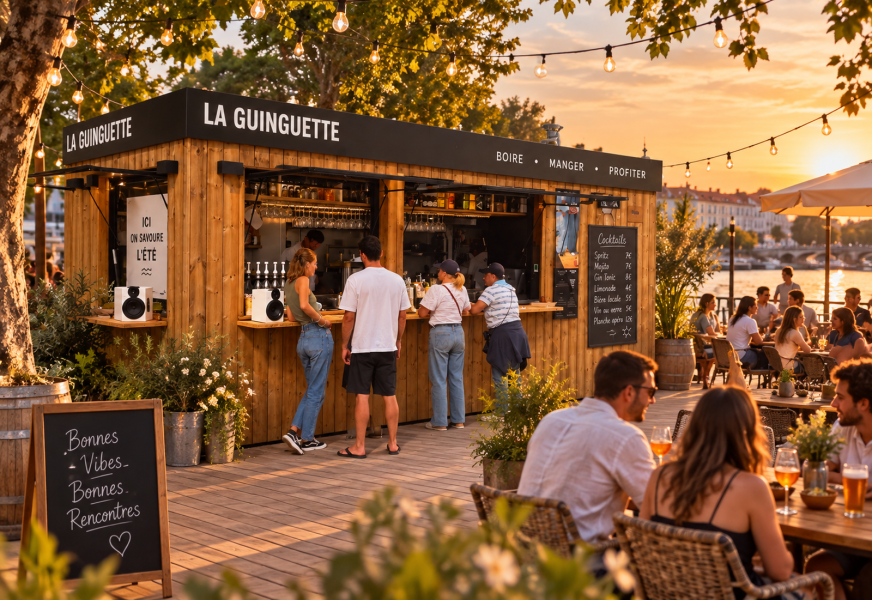
Creating a guinguette (open-air café/bar): why the kiosk is an ideal format
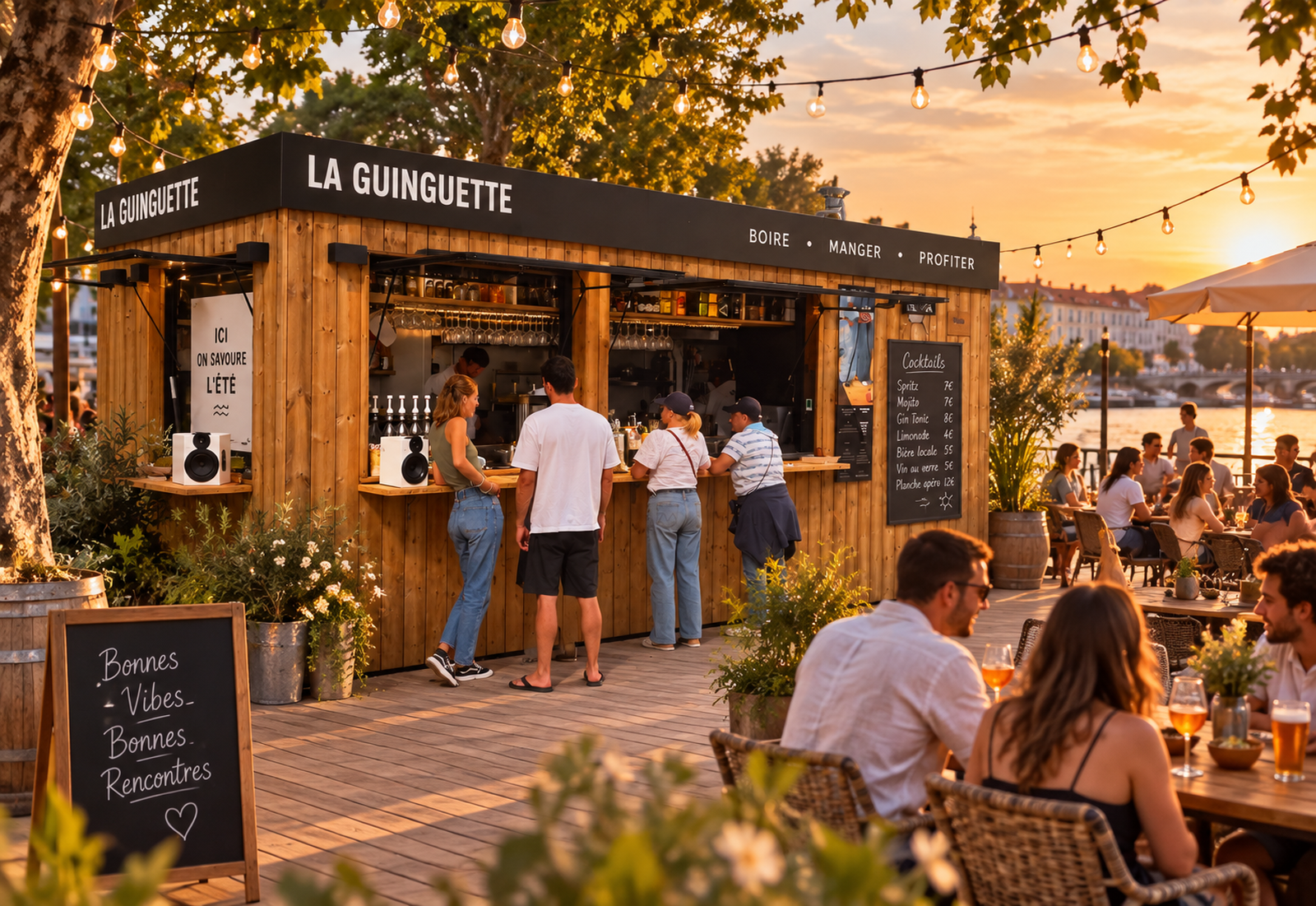
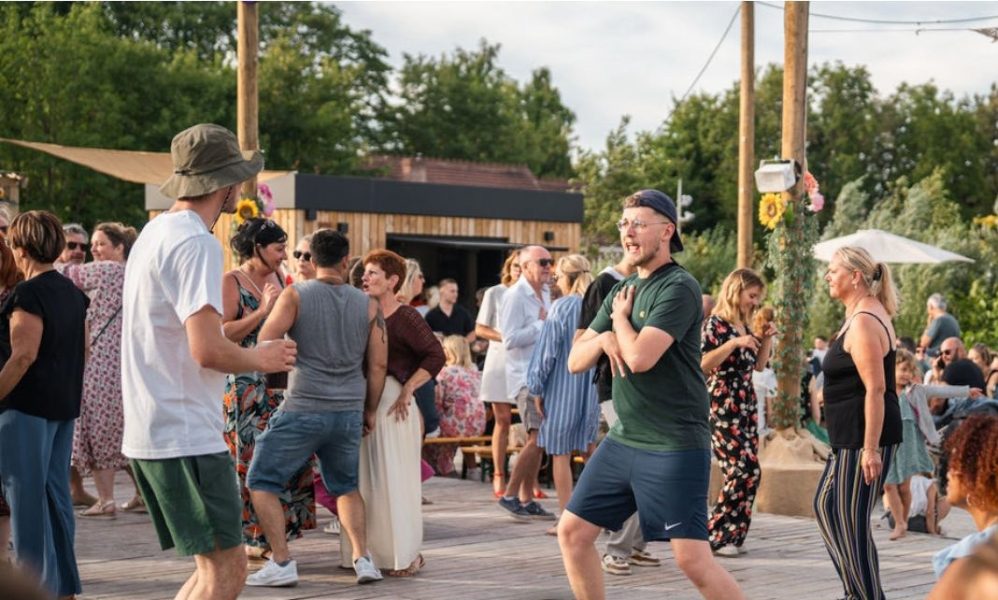
Outdoor cafes are making a strong comeback, but their success is no longer solely due to lanterns and large tables. They cater to a very current desire: to enjoy a place, eat or drink simply, meet up outdoors, and experience something freer than in a restaurant. In this context, the food kiosk almost naturally finds its place.
The modern open-air café: a place to live before it is a building
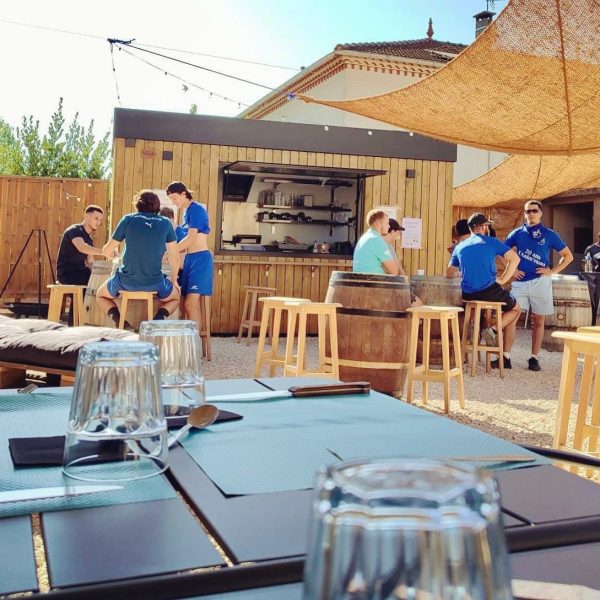
The terrace is the room, the kiosk becomes the production tool
In a traditional restaurant, a significant portion of the building is dedicated to the reception area and dining room.
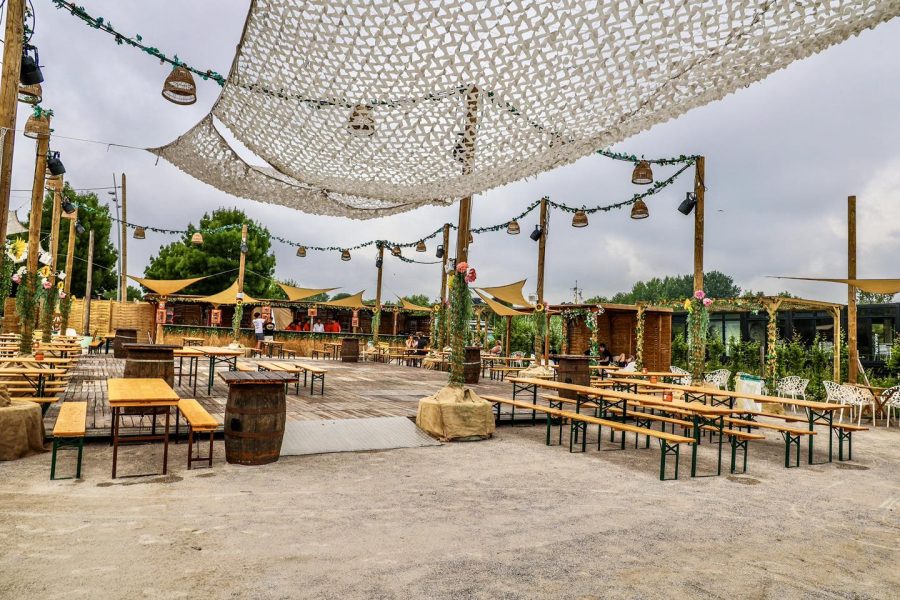
In a guinguette (a type of outdoor café), this dining area already exists: it's outdoors.
Tables, high tables, large communal tables, greenery, parasols, lighting, and convivial spaces naturally compose the venue.
The food service area can therefore focus on the essentials: preparing, storing, serving, and taking payments.
This is a particularly effective approach, as a few well-organized square meters can accommodate a fully equipped professional kitchen or bar without unnecessarily taking up space available for customers.
The bandstand is no longer simply the entrance for the public; it becomes the technical engine of the open-air café.
And the more the terrace expands, the more interesting this distinction becomes.
A successful outdoor café starts first and foremost with its location
Before the decoration, the menu or the furniture, one question should guide the project: is this a place where people will want to stay?
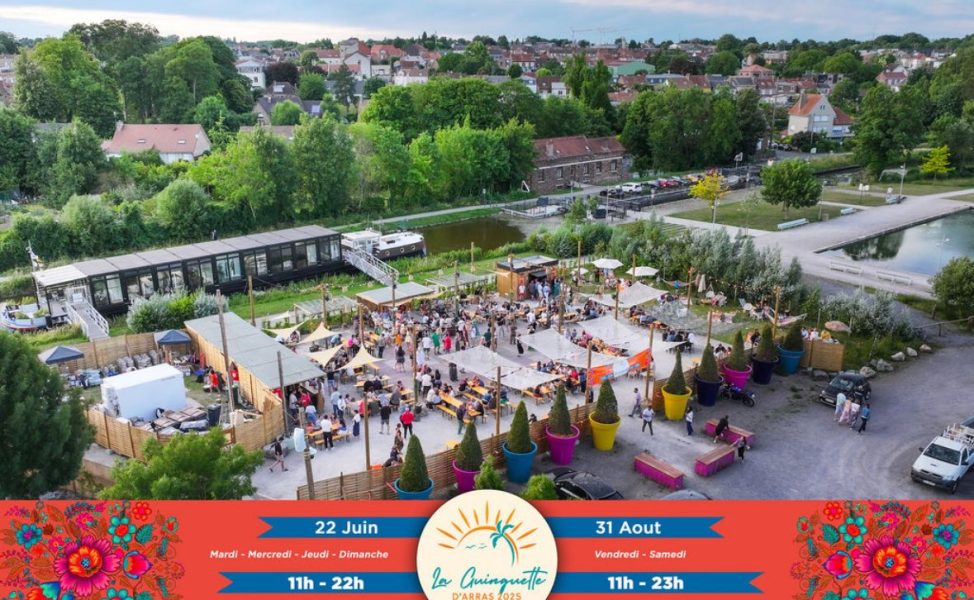
A riverbank, a lake, a park, a leisure center, a campsite, a vineyard, an urban promenade, or simply a wooded area can become the starting point for a guinguette (a type of open-air café/bar).
The environment directly contributes to the experience and can sometimes be as important as the food and drink offered.
This is also what makes the concept attractive to local authorities, campsites, leisure parks, estates, hotels, or site owners who already have an appealing location but not necessarily a building suitable for catering.
The kiosk allows them to add a real point of sale while preserving the outdoor space available for the terrace and other site uses.
A relaxed atmosphere requires a highly professional work tool
The image of the open-air café is intentionally simple: a few tables, fairy lights, music, cold drinks, and a menu that's easy to share.
But this simplicity for customers shouldn't obscure the reality on the business side.
You have to manage the cold, the preparation, the cooking, the washing up, the storage, the waste, the staff flow and sometimes a large number of orders concentrated in two or three hours.
A casual outdoor café can therefore have an informal feel while still requiring a truly professional catering setup.
This is precisely where the food kiosk or container comes into its own: preserving the open and friendly atmosphere of the place while efficiently organizing everything that the customer doesn't see.
Bar, tapas, platters, snacks: a short menu can generate a lot of business
A guinguette doesn't need an endless menu.
A short and easy-to-read offering generally better reflects the experience: drinks, cocktails, beers, tapas, platters, local products, burgers, plancha-grilled food or a few signature dishes.
But a short menu doesn't necessarily mean slow business.
A terrace can fill up very quickly in the early evening and concentrate a large portion of its revenue within a limited timeframe.
Turnover then becomes more important than the number of items on the menu.
The location of the bar, the counter space, the refrigeration capacity, the beverage storage, the flow between stations, or the separation between orders and collection can make a considerable difference when business picks up.
The concept can also evolve throughout the day: drinks and ice cream in the afternoon, aperitifs in the early evening, food service later, followed by a more bar-oriented activity.
This versatility is one of the strengths of a well-designed outdoor café.
Which kiosk should I choose for a guinguette (outdoor café/bar)?
There is no ideal size that works for all projects.
The right size depends on the menu, the number of outdoor seats, the anticipated customer traffic, and especially the respective proportions of the bar and kitchen.
For a casual outdoor café with a structured catering offer but a controlled footprint, the
Wooki 4500
allows you to have a real professional space while remaining compact.
When the project requires more counter space, storage or production capacity, the
Wooki 6000 in 20-foot container format
is particularly suited to a bar, tapas, snack or restaurant business with a higher volume of customers.
The goal, however, is not to choose the largest possible module.
Rather, it's about selecting the smallest tool capable of adequately handling the expected level of activity.
The remaining investment can then be allocated to the terrace, furniture, lighting, landscaping, or programming: everything that will give the space a true identity.
The first season also allows us to understand the true potential of the place
This is one of the peculiarities of a new open-air café: before the site has really been exploited, it remains difficult to know precisely how it works.
Attendance may exceed expectations.
The bar could account for a much larger share of business than anticipated.
Conversely, the success of the restaurant could quickly create additional needs for food preparation, refrigeration, or storage.
In this context, starting by
renting a food kiosk
can make sense.
It allows you to launch the concept quickly with professional equipment, without immediately tying up a significant investment in a facility whose final size is not yet fully known.
The first season then becomes a true full-scale test: actual attendance, peak hours, average spend, the bar's share of the restaurant business, storage needs, and staff organization.
This data then allows the project to be intelligently developed.
Grow the outdoor café rather than over-promoting it from the start
The modular format offers another advantage: the project can evolve with its success.
A first kiosk can be perfectly sufficient for the launch, then after a season, reveal the value of a second module dedicated to a bar, kitchen, or a new food offering.
Capacity then increases without altering the overall site.
Once the concept has been proven and the location secured over time, the operator can also choose to
move on to purchasing a food kiosk or container,
or use the experience gained to develop a tailor-made project perfectly sized for the activity.
This progression is particularly consistent with a guinguette: start with the right level of commitment, observe the actual functioning of the place, then invest when the needs have become much more predictable.
A guinguette doesn't have to look like any other guinguette
The return of the guinguette doesn't necessarily mean the return of checkered tablecloths, red lanterns, and a retro aesthetic.
Today, the word refers more to a way of experiencing a place than a specific decorative style.
A guinguette can be rustic, contemporary, urban, Mediterranean, or very minimalist.
It can offer local products at a vineyard, tapas by the water, burgers in a park, or a short menu at a leisure center.
This freedom is also appealing with a kiosk.
The cladding, signage, counter, outdoor furniture, and wayfinding allow for the creation of a strong identity without constructing a building that visually dominates its surroundings.
The module provides the working tool; the place builds the experience.
A format that is particularly relevant for local authorities and tourist sites
For a community or site manager, a guinguette can address a very concrete problem: bringing life to a space that already has an audience but few services.
Parks, promenades, water sports centers, campsites, tourist resorts, or event spaces can all accommodate food services without immediately requiring the construction of a traditional restaurant.
The project can begin with a single season, find its audience, and then gradually expand.
This approach is found in many Wooki projects: installing a food service tool directly where there is already high traffic.
You can discover different configurations on our page
showcasing food kiosks and containers.
Don't forget the very real constraints of the site
Even when the concept is simple, a guinguette (open-air café/bar) must be planned like a real business.
Before installation, it is necessary to anticipate the electrical needs, water supply and drainage, waste management, delivery access, storage, sanitary facilities, public accessibility and the permits required for the activity.
These factors can directly influence the kiosk's location and interior layout.
Incorporating them from the outset prevents designing a beautiful terrace around a tool that would later be difficult to use.
In conclusion: a guinguette is first and foremost a place, not a building
The success of guinguettes probably lies in this apparent simplicity: eating and drinking outdoors, meeting up with friends, enjoying a place and an atmosphere without the formality of a traditional restaurant.
In this equation, the kiosk naturally finds its place.
It concentrates the technical part of the project in a small space and leaves the leading role to what really attracts customers:
the location, the terrace, the atmosphere and the experience.
And because a first season does not always allow us to anticipate the real potential of a site, the modular nature of the project provides additional flexibility: start, observe, then expand or invest when the concept is validated.
Are you thinking about opening a guinguette (open-air café/bar)?
Tell us about your project.
We can help you choose the format, layout, and level of equipment best suited to your business.