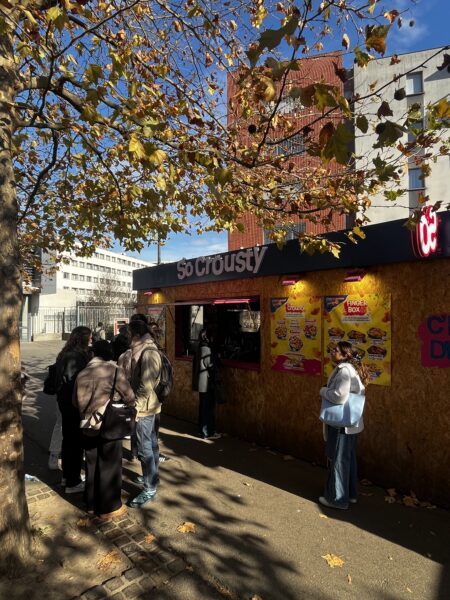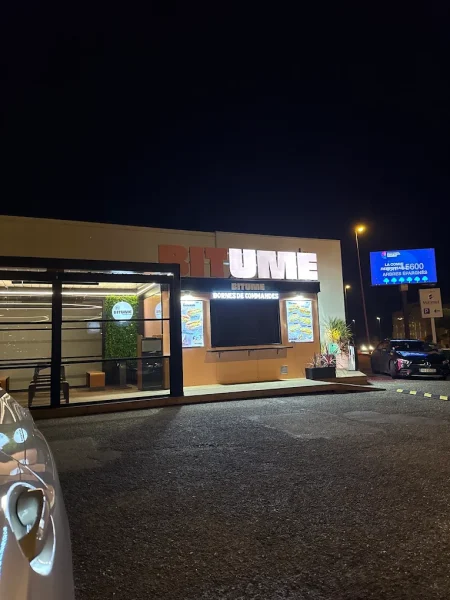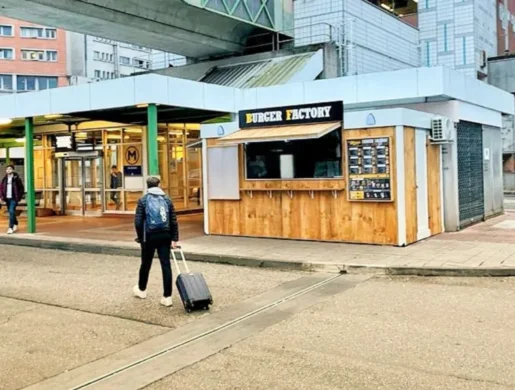
Finding the right location for a food kiosk: methods, tips and field feedback
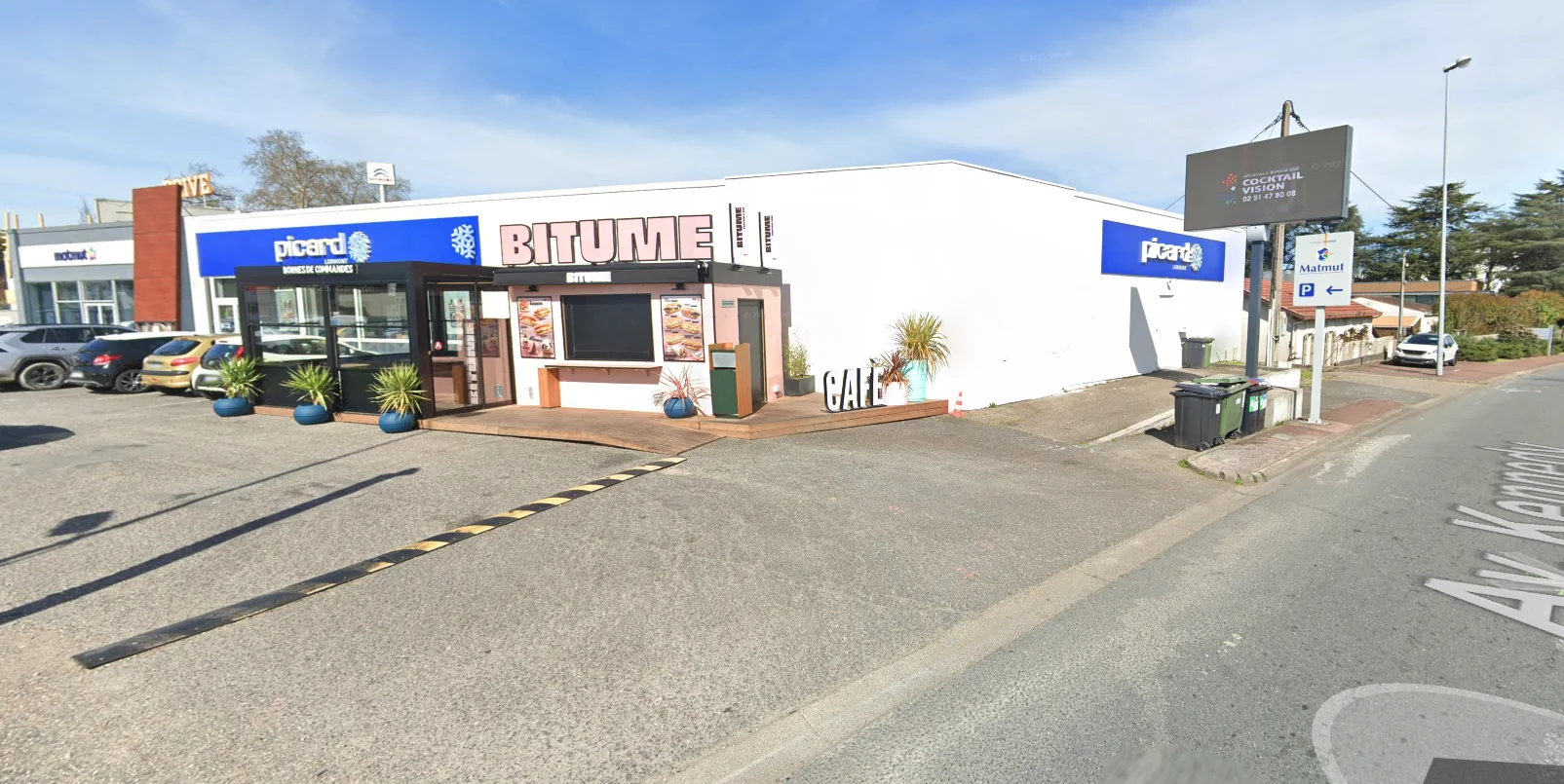
Location is a key factor in the success of a food kiosk project.
Private parking lots, public spaces, train stations, or high-traffic areas: each type of location is subject to different rules, costs, and challenges. This article offers a practical overview of the available options, arguments to use to convince a host site, and technical and legal considerations to anticipate before launching your project.
Private locations, public spaces and concessions: how to establish a successful kiosk presence
In a food kiosk project, location often matters more than the concept itself.
A good product in a poor location remains invisible. Conversely, a well-chosen location can transform a simple concept into lasting success.
The good news: a kiosk opens up many possibilities where a traditional shop is sometimes inaccessible.
You just need to know where to look and how to go about it.
Why location is strategic for a kiosk
A kiosk doesn't need 150 square meters or a prime street location. What it needs most is: foot traffic, visibility, easy access, and available infrastructure.
With a footprint often limited to just two or three parking spaces, it integrates easily into locations where a traditional restaurant is impossible.
Private locations: often the easiest to activate
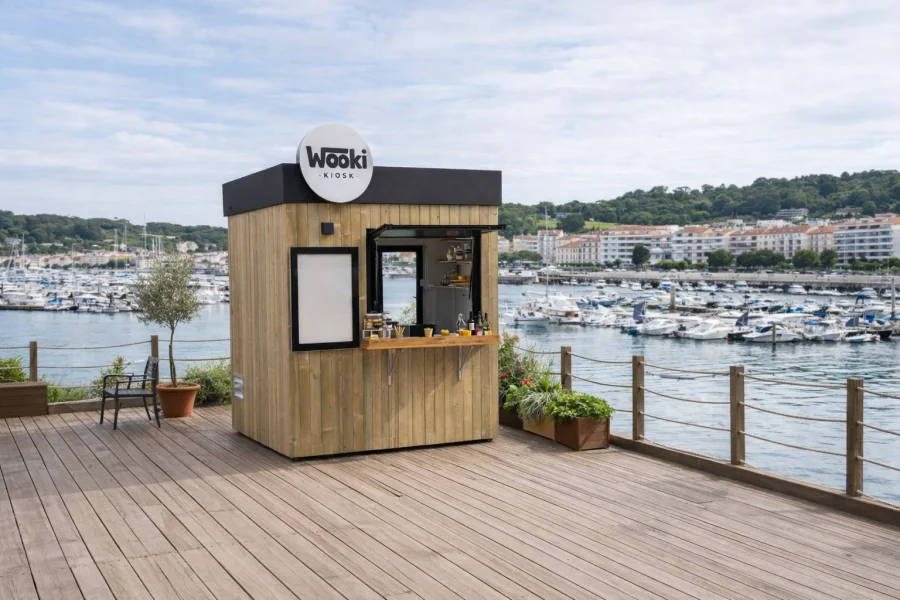
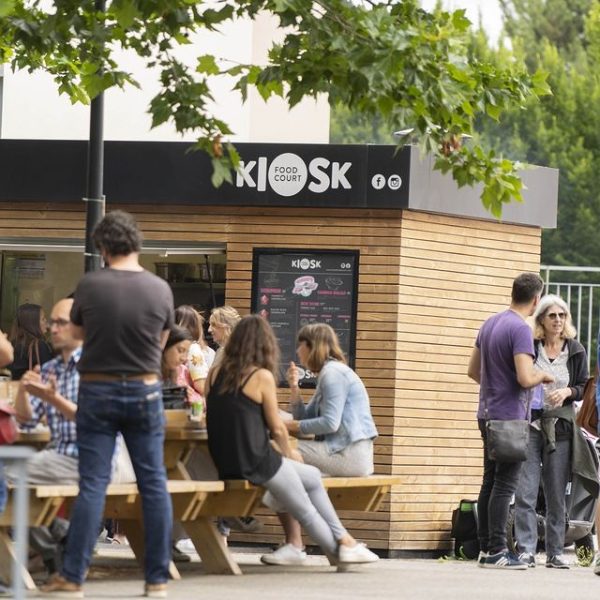
Store car parks, commercial areas, office sites, leisure facilities, hotels: this is often the fastest entry point to launch a project.
How to proceed
- Identify a site with parking and natural traffic flow.
- Contact the store manager or site manager.
- Present a clear project: concept, schedule, technical requirements, integration.
What is most convincing
- The kiosk enhances the point of sale and the image of the site.
- It increases traffic and creates cross-visitation.
- It extends the time spent on site (coffee break, snacks, waiting).
- It can be complementary to the existing activity (without cannibalizing).
In terms of budget, private locations are often competitive: sometimes free, most often between €0 and €500/month,
and rarely more (excluding premium sites).
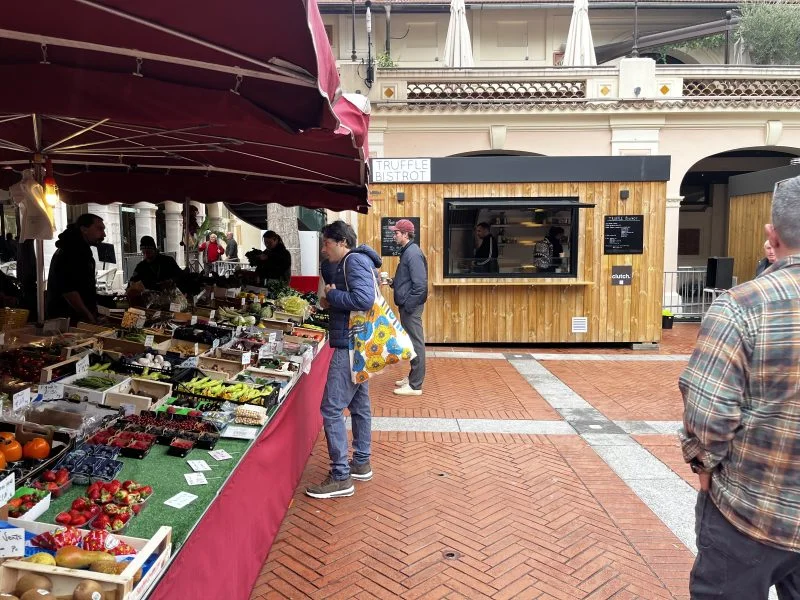
Public spaces: municipalities, city centers, tourist areas
On public property, the process is often similar to that of food trucks:
contact town hall (or commerce/public property occupancy department), submission of a file, sometimes a call for projects.
This means that it is difficult to consider reselling a business under the same conditions as for a standard commercial property.
The prices charged vary depending on the municipality, the area and the level of activity, but amounts are often in the range
of €100 to €500 per month.
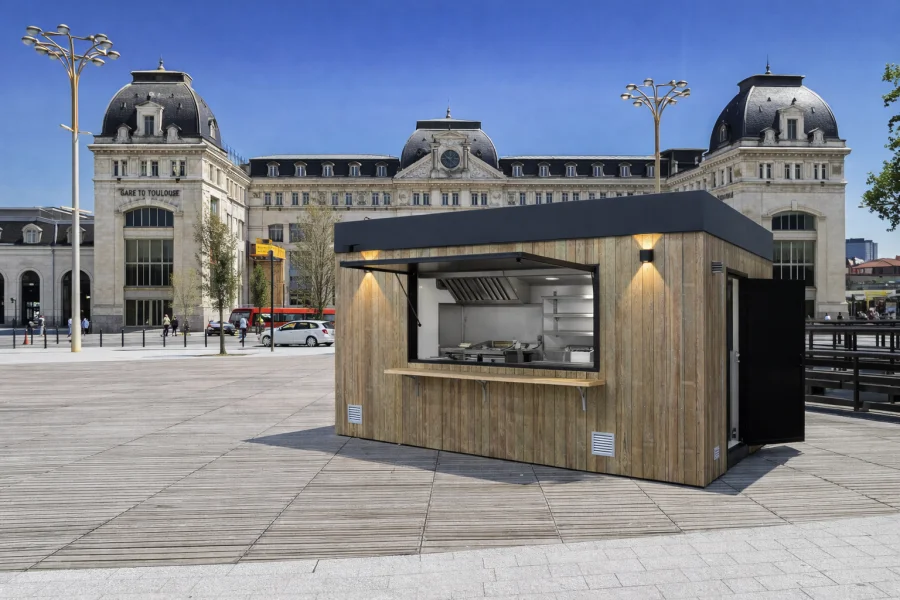
Train stations, SNCF (French National Railways), airports: very heavy traffic, specific rules
Concessions at train stations or sites like SNCF (French National Railway Company) can be shorter (for example, 12 months renewable once, sometimes longer).
The process is more structured and the selection more demanding.
In train stations, airports, or large, high-traffic sites, the business model is frequently based on a percentage of revenue
plus a fixed amount. Costs are higher, but visitor numbers can be the deciding factor.
The point that should never be overlooked: networks
Before validating a location, the technical foundations must be secured. This is often where operational success hinges.
- Electricity available (and sufficient power)
- Three-phase power available if needed
- Water supply and drainage
- Extraction/ventilation constraints
- Delivery access, waste disposal, customer traffic
To be negotiated from the outset: who finances and carries out the connections (trenches, boxes, upgrades to standards),
and within what timeframe.
A key legal point: the duration of occupancy
If the goal is to develop a profitable business and potentially resell it one day, it's important to aim for a 3/6/9 lease or a sufficiently long-term agreement , whenever possible . This is crucial for the project's stability and value.
Some field tips to save time
- Reasoning based on real-time data (counts, peak hours, seasonality), not just intuition.
- Prioritize complementarity with the site's activity (and demonstrate it).
- Avoid overly constrained locations during the testing phase: start simple, then ramp up.
- Anticipating operations: access, deliveries, storage, queuing, visibility.
At Wooki, the goal is simple: once the site is validated, we provide you with the kiosk you want (custom-made, designed for operation),
with very short deployment times compared to a traditional construction site.
Conclusion
Finding a good location requires a methodical approach, a clear pitch, and some essential checks.
But this is also one of the kiosk's great advantages: its ability to set up quickly, cleanly, and in places where a traditional restaurant cannot go.