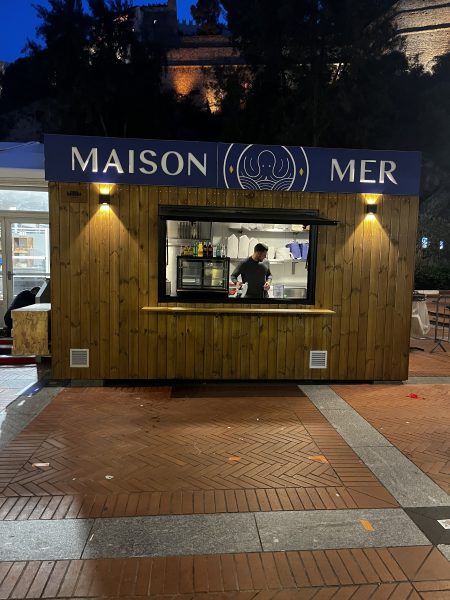
Kiosk, container or traditional premises: which format to choose?
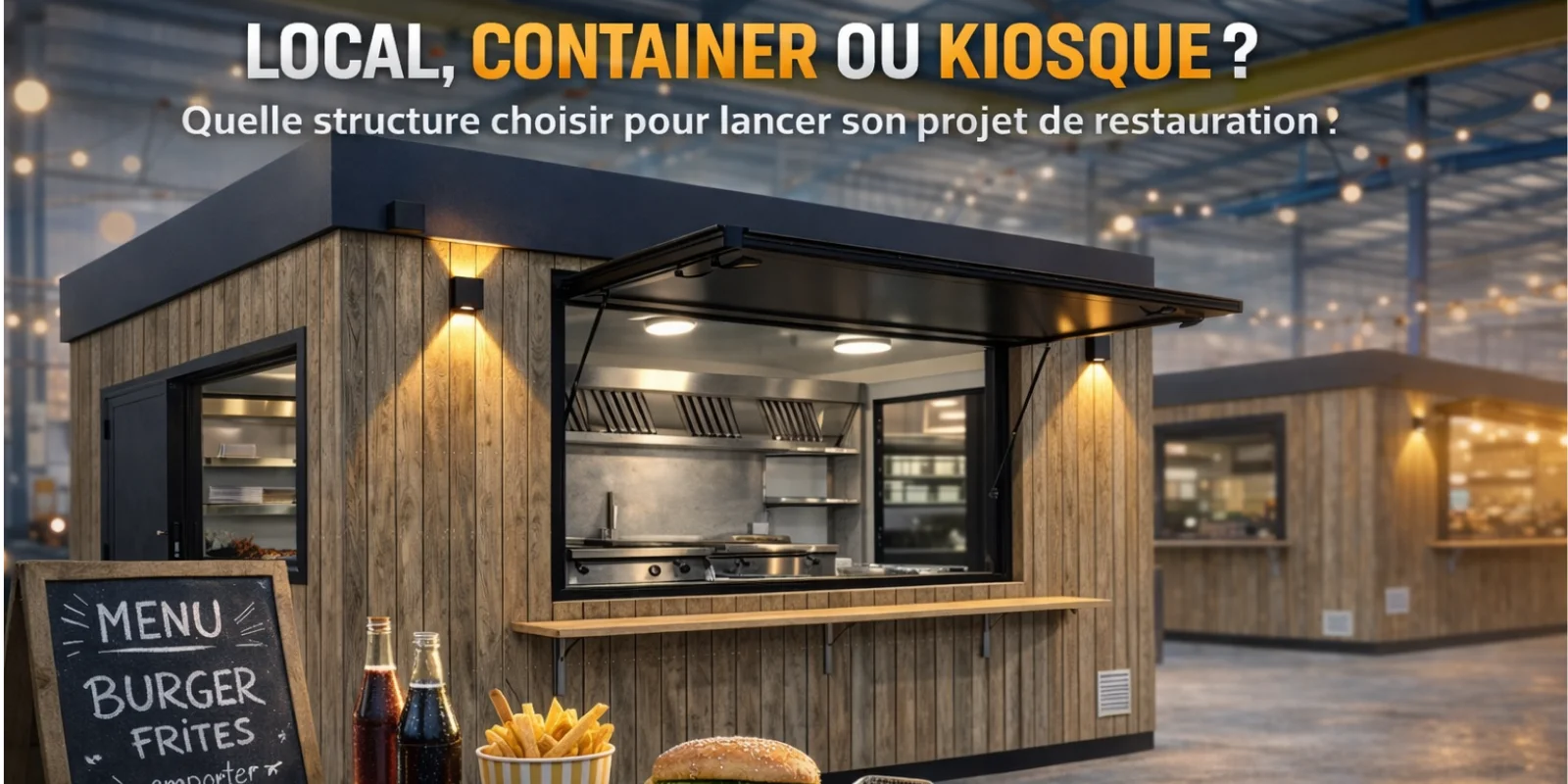
Choosing the right format is a key step in the success of a restaurant project.
Traditional premises, converted shipping containers, or a kiosk: each solution addresses very different operational, time, and budget constraints. Understanding these differences allows you to make a coherent choice from the outset.
Compare recovery formats to make the right operational choice
When launching a restaurant project, the choice of format is crucial.
Traditional premises, converted container or kiosk: these solutions respond to different logics, with very concrete impacts
on operations, deadlines and costs.
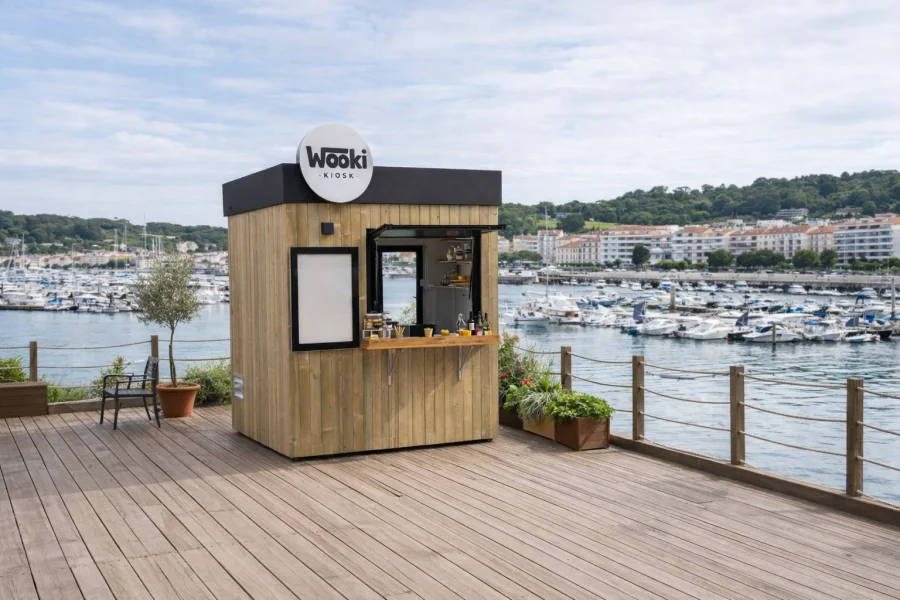
At Wooki, we primarily focus on kiosks, custom-designed for the restaurant industry.
We also work with container formats when the project allows.
The key is to understand what each approach truly entails.
The traditional local setting: a stable but highly engaging environment
The local restaurant remains a proven model. It offers a comfortable space, a permanent interior dining area
, and a lasting presence.
In return, it generally involves a long commercial lease, often extensive renovations,
significant delays, and high fixed costs.
It's a suitable format for a well-established project with a defined customer base and a long-term vision.
The converted container: an existing structure adapted for catering
The container is, originally, a logistics product.
In a restoration project, we therefore start with an existing structure that needs to be transformed.
In practical terms, this means:
- an anti-corrosion treatment (the containers are often referred to as "first voyage")
- complete insulation, usually using sandwich panels
- the creation of openings
- network integration (electricity, water, extraction)
- interior design
At Wooki, we use this format when the project requires it, particularly for its industrial aesthetic
or when a standard volume is desired.
For equivalent dimensions, a converted container often costs slightly more than a kiosk,
because it requires adapting a structure that was not originally designed for catering.
Note: our
Wooki 6000
has the exact dimensions of a 20-foot container, while being designed from the outset as a true food kiosk,
with an optimized interior organization.
The kiosk: a structure designed from the outset for operation
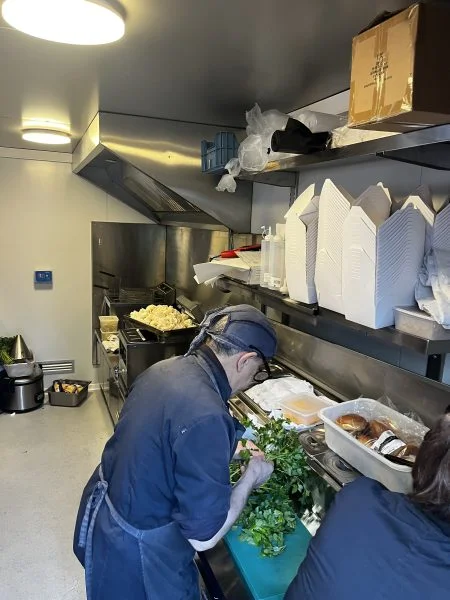
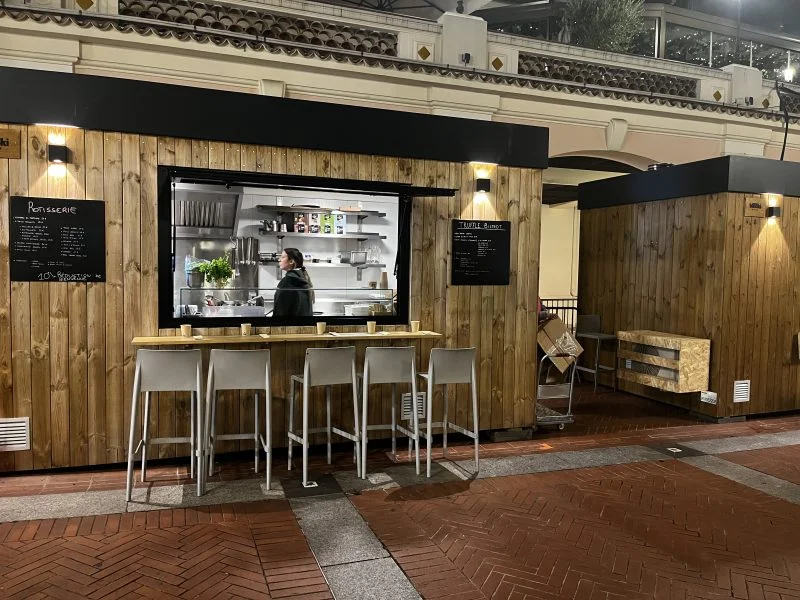
Unlike the container, the kiosk is designed from the outset as a working tool.
Its structure is generally based on:
- a metal frame
- sandwich panel insulation
- an exterior cladding, most often in wood siding
At Wooki, we are increasingly using refurbished metal structures,
which helps to limit the environmental impact while guaranteeing a level of quality equivalent to new.
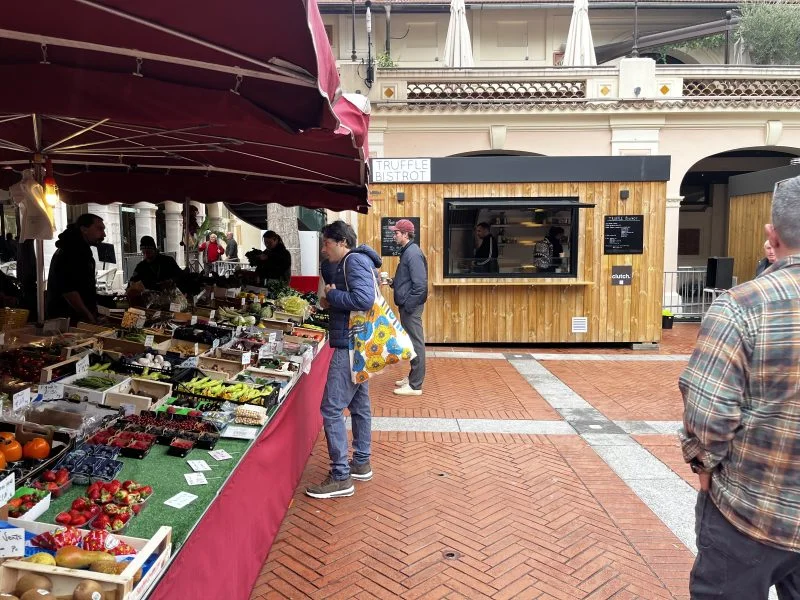
The advantage of the kiosk is its great adaptability:
custom dimensions, interior organization designed according to the concept,
finer integration on site and optimized ergonomics for production.
This is the format we currently prefer, as it offers the best balance between operational efficiency,
speed of deployment and cost control.
Very concrete differences on the ground
Beyond aesthetics, the differences lie primarily in:
- the speed of commissioning
- the level of adaptation to the project
- ease of operation
- the capacity for evolution
- economic readability
The kiosk offers precise placement.
The container adds volume and an industrial identity.
The building provides stability but requires a strong commitment.
Which format for which project?
There is no one-size-fits-all solution.
The right choice depends on the type of clientele, the level of traffic, the duration of the project,
the budget, the technical constraints of the site, and the stage of maturity of the concept.
A project in the testing phase will not have the same needs as a permanent establishment.
A local authority does not think like an independent restaurant owner.
It is precisely at this stage that support becomes essential.
From the module to the living space
These formats can also be combined.
Several kiosks or containers can form a food court,
allowing for a wider range of offerings, increased cross-visit traffic,
shared equipment, and the creation of a lively site atmosphere.
It then transforms from a simple food outlet into a genuine living space.
The Wooki approach
At Wooki, we always start from the ground up.
We analyze the site, the uses and the constraints before defining the right format:
custom kiosk, container or combination of both.
We are involved in the design of the modules, their implementation,
coordination with operators, and operational monitoring.
Our goal is not to impose a format, but to build a solution tailored to each project.
In conclusion
Kiosks, containers, and traditional premises are not mutually exclusive.
They respond to different contexts.
The key is to use the right tool in the right place, with a design adapted to actual use.
This approach is what allows for the creation of sustainable, functional, and economically viable projects.