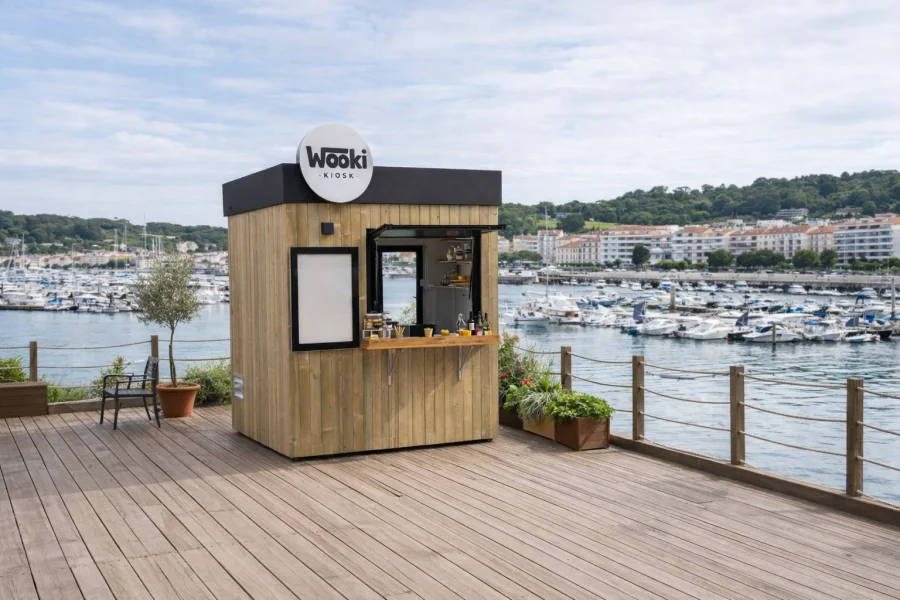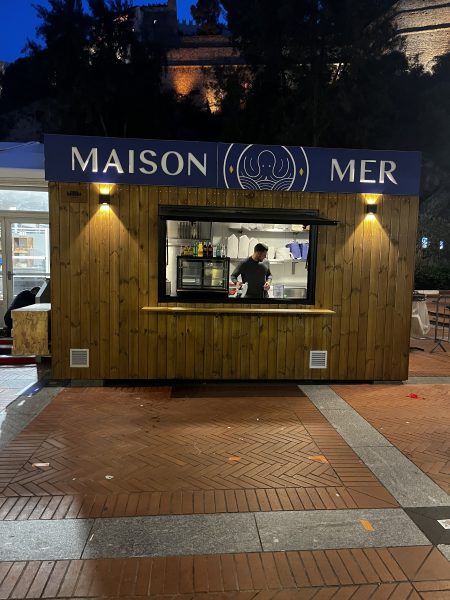
The food kiosk: a fully-fledged professional format
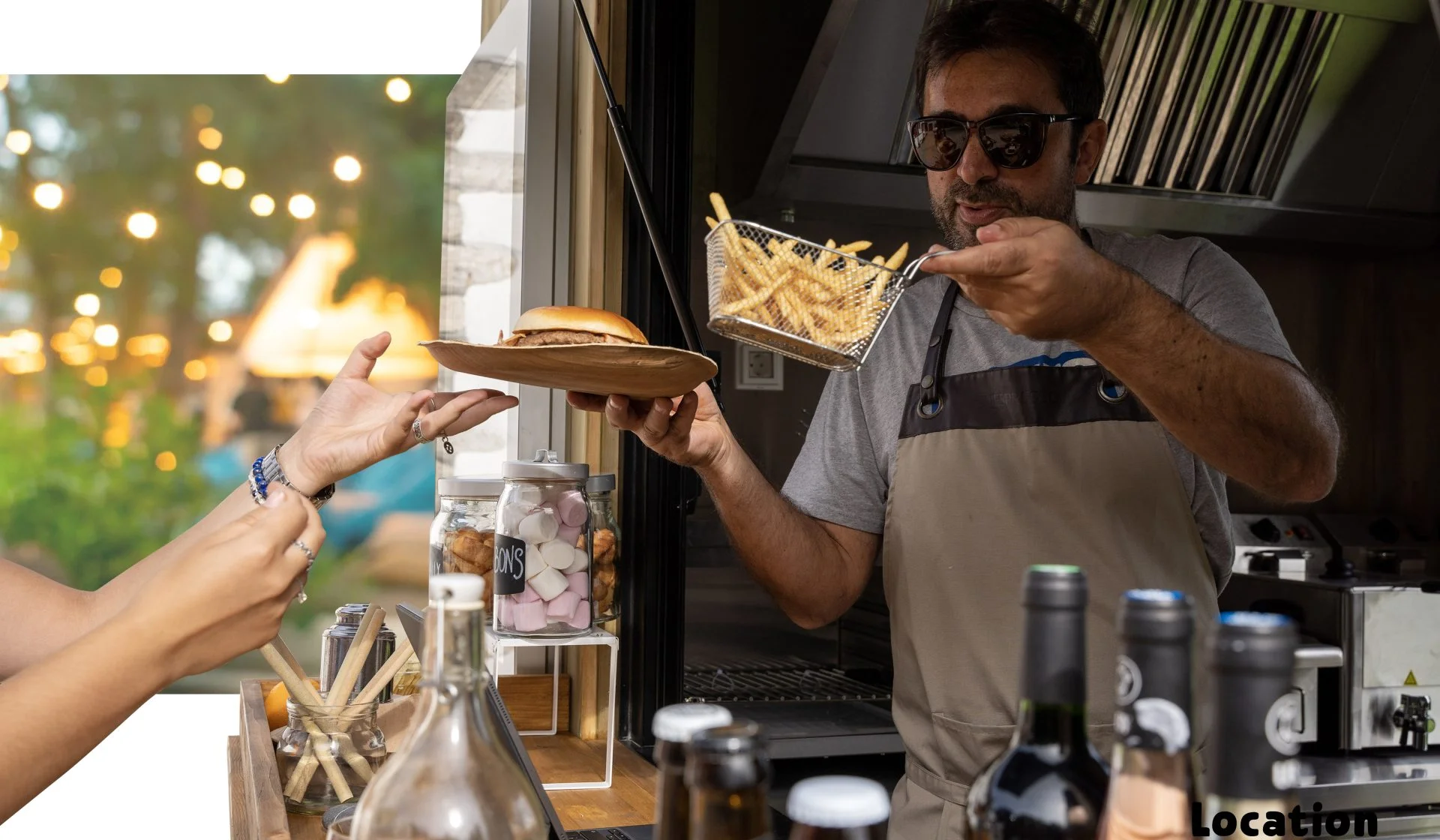
Long considered a temporary solution, the food kiosk has evolved significantly.
Now designed as a true working tool, it meets the current challenges of the food service industry: flexibility, speed of implementation, cost control, and adaptation to the uses of urban, public, or private sites.
Why the kiosk is now emerging as a real alternative to the traditional restaurant
For a long time, the kiosk was seen as a temporary, or even secondary, solution to the traditional restaurant.
Today, this view has largely changed.
In many urban projects, public sites or activity zones, the kiosk has become a true catering tool,
structured, standardized and designed for sustainable operation.
At Wooki, we support both independent restaurateurs and public or private sector organizations.
And what we see on the ground is clear: a well-designed kiosk is anything but a cheap imitation.
A working tool, not just a point of sale
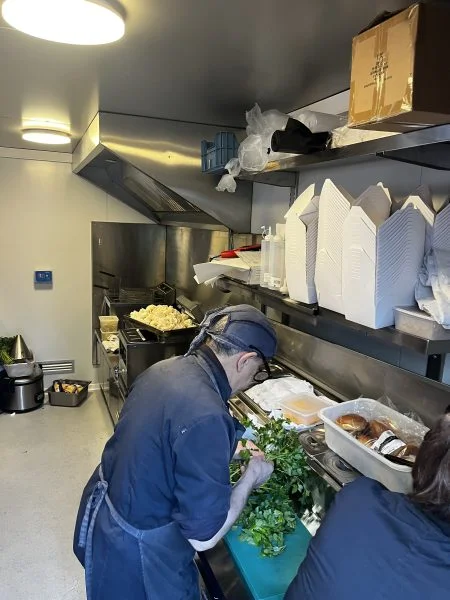
A professional kiosk is not a stand. It is a production and service space equipped like a compact kitchen:
suitable catering equipment, separate hot and cold zones, integrated storage, clean and dirty circuits respected,
ventilation and electricity sized appropriately.
In practice, a kiosk is designed like an optimized kitchen. Every square meter is useful, which promotes a
more direct and often more efficient organization, both for the team and for the customer.
Faster setup than a traditional location
Opening a restaurant in a physical location typically involves finding a lease, obtaining permits, undertaking renovations, and dealing with sometimes unpredictable delays.
With a kiosk, many of these steps are planned in advance.
The module is manufactured in advance, equipped, tested, and then delivered ready to be connected. This significantly reduces the time
between decision and launch, a key advantage for quickly activating a site or responding to an opportunity.
Valuable flexibility for operators
The kiosk offers a flexibility that is difficult to achieve with a traditional location: testing a concept, adapting to seasonality,
evolving the offer or changing location if necessary.
For a restaurant owner, this allows them to validate their business model before considering a larger investment.
For a site manager, it's the opportunity to adjust their offering without locking in the layout for several years.
Improved cost transparency
Without claiming to replace all formats, the kiosk often allows a more controlled approach:
lower initial investment, optimized surface area, reduced fixed costs, smaller teams and gradual ramp-up.
This format is particularly suited to launch phases, pilot projects or long-term temporary installations.
From the isolated kiosk to the food court
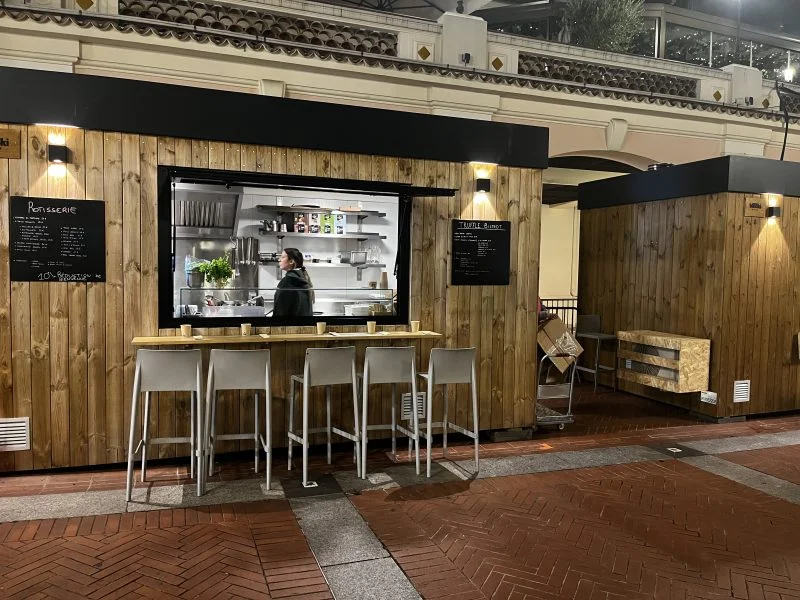
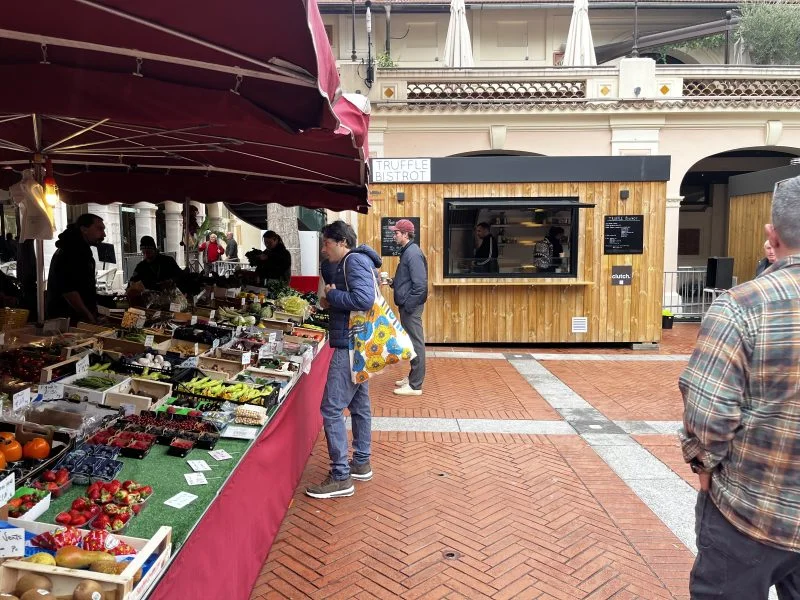
A kiosk works very well on its own. But grouped together, several kiosks can form a real food hub:
a food court.
This organization allows us to broaden our offerings, generate cross-visit traffic, and create a vibrant site environment.
It's an approach we regularly deploy at Wooki, combining kiosks and containers to structure
genuine living spaces.
Some formats, such as the Wooki 4500,
allow a complete professional kitchen to be integrated into a compact module, suitable for both an independent project
and a high-traffic site.
The Wooki approach
Our business is not limited to providing modules.
We support projects in their entirety: defining the format, designing kiosks or containers,
on-site installation, coordination with operators and operational monitoring.
When necessary, we also intervene in
land searches,
in order to identify the most relevant locations.
We work with restaurateurs, communities, and large site managers alike,
with the same requirement for reliability, compliance, and sustainability.
In conclusion
The food kiosk is no longer an alternative solution.
It is a fully-fledged professional format, capable of meeting the current challenges of the food service industry:
flexibility, rapid deployment, cost control and adaptation to new uses.
When well designed and well operated, it becomes a real lever for revitalizing places
and economic development.